Fred and Loathing on The Internet
Welcome to the public web log of Fred Lambuth
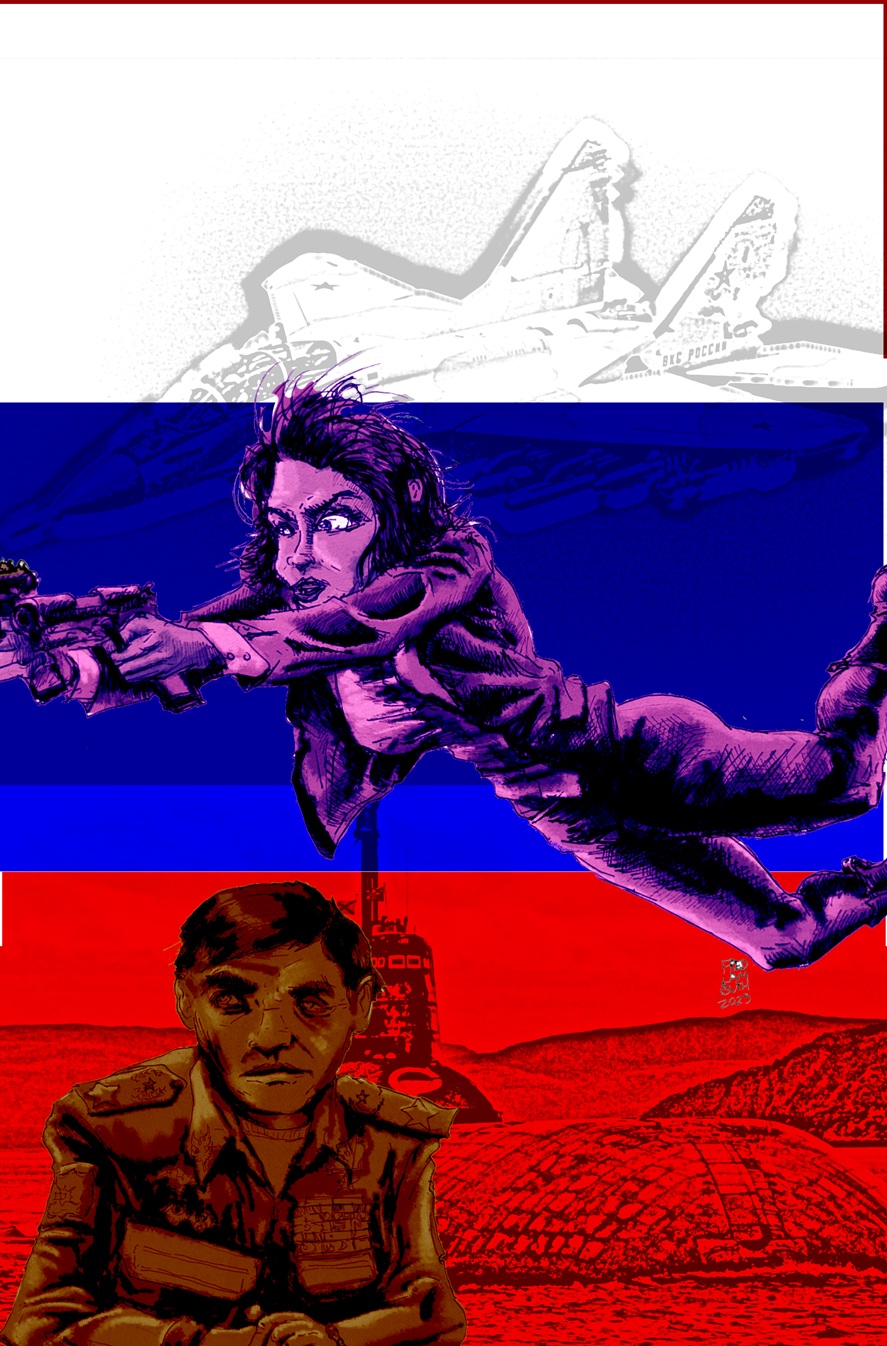
Back In The USSR
2025-Nov-12
Spy novels themselves are the topic today. Why? Oh, just because there is one particular spy novel I have read recently. That novel would be Red Sparrow by Jason Matthews. Thus we have something blog-worthy to talk about. There’s other media consumption going on, mind you. New films. Old films. Comic books! Among those choices, we here at the editorial dept went with Red Sparrow. And about what I like about spy novels.
Before we go on, I will flat out state that I liked the book. I felt that the writer was enjoying himself while he wrote the thing. From what I have gathered (among my trusted sources), is that he is an ex-CIA professional of many years. Knowing that, I picked this book up hoping for the closest thing to a true-crime spy novel. Who else could write an accurate depiction of the post-Cold War spy game other than a recent veteran?
There were a lot of very cold clinical depictions of true-to-life spycraft in this book. There is no denying this guy knows what it is to follow somebody or check if you are being followed. The modern espionage tactics; the up close and personal level of spying, was accurately depicted. Meaning he gave painstaking attention to describing how people walking around a metropolitan area can be surveilled. Sometimes the storytelling would be inverted when the protagonist try to thwart these textbook surveillance techniques.
The book contains numerous pages dedicated to players in the intelligence game watching or evading other players moving about European capitals. That is really where the author seems to come to life as a writer, rather than as just some guy telling you about what happened in the story about secret agents working for the USA and Russia. When it comes to any part of the story not involving being followed, he does a lot of that ‘tell, now show’ type of writing. Even on some meaty parts of the story.
Parts where I wish he would write deeper into the scene. Scenes where there is a chance for a character to explain their reasons. Something meatier than, “he told her about the betrayal”. I do not expect Jason Matthews could write a biography of Kim Philby that would give you any insight as to why he became a traitor. I’m sure it would have well researched walking routes of London.
Had I to write a one sentence summary of this book, it would be: "Former CIA professional clumsily tells you about cliched characters playing the international espionage game of mystery. Bland writing, but when the story involves somebody being followed, he will give a description that could hold up in a court record.”
The writing in between the tense moments of people being expertly followed had more in common with Hollywood drama than convincing geopolitics. Those parts were not so memorable. (Although well crafted chapters about somebody evading a tail is not exactly something I am likely to remember throughout my days.)
I do not fault the author for not being the most sensitive or philosophical of novelists. Nor do I condemn the writer defaulting to easy plot ideas. I got a delight from reading a trained professional intelligence official pushing his way through four hundred pages of hamfisted writing. I can forgive my usual forbearance against writing that ‘tells’ rather than ‘shows’ in this case.
He made a lot of sensational writing choices that I suppose made the book more of a novel that could move copies instead of a believable story from the annals of the CIA. The main character is a sexy Russian lady who comes of age in Putin’s Russia. Oh, also she can see the color of people’s aura.
That is not a typo. The main character is supposed to have the ability to read people’s spirits as if they had a colored thought bubble above their heads. Apparently purple is for the good guys, yellow is for the bad. This is a spy novel recommended by other people in the industry. Knowing that beforehand made the choice to include ‘auras’, let alone color coordinated ones, was a peculiar choice. Especially since she hardly got to use this ‘virtual has a color’ skill as a spy. Instead it felt like lazy writing to tell the reader if somebody was a good guy or bad guy, which itself is incredibly lazy writing to have such obvious good and bad guys.
Juicy story chunks like chromatic auras and bodily seduction make Red Sparrow more like a thriller when what I was expecting was a ‘true-crime’ spy novel. The less than bestseller spy novels are more like a by-the-facts intelligence brief that is followed by the cryptic words of a professional remarking on mundane acts that just happened in the novel. Jason Matthews went with a more sellable idea of how to make a novel about the West’s spies vs Russia’s spies than what I was looking for.
I appreciate the effort Jason Matthews made to accurately describe the tradecraft of spies in the employ of the USA or Russia. He strung those together with some mildly implausible strategic premises among very plausible tactics. The props were expertly detailed in his words. And also the food. A curious choice that lost its novelty as I continued through the chapters. The story felt wild but the world it was set in gripped you with believability.
The characters were filled out enough for my tastes to get the story moving along. It finished being a mildly cartoonish spy novel instead of the by-the-numbers CIA vs KGB(or FSB, NKVD, etc) caper I had expected for the first fiction work of a US intelligence veteran of the post 9-11 era.
Spy books have been mentioned as what gets passed around the development team here at fredlambuth.com. Most of those books have been non-fiction. Histories of espionage that make the effort to chronicle the truth. One would think the blog development team is more interested in the truth of what Cold War spies could ascertain, rather than the romance that comes with using duplicity and violence as methods to your profession. Tools of the trade that normally are condemned, but are given special sanction when spies use them for matters of national security.
That would definitely be the case for non-fiction spy stories. Those books read in the search for truth. Stepping stones along the way to understanding just what the fuck is going on in the world. What Red Sparrow, a spy novel, has ignited in me is a new penchant for spy novels themselves. Leaps from the truth, into the gratuitous. Genre fiction!
The kind of novels that can lean into the standards of the genre, teetering on the edge of satire. And if it goes far into satire, then hopefully the author loves the subject enough to show it in the writing. James Bond was not what directly got me interested in spy novels. Be that as it may, my adult interests in Cold War non-fiction books had brought me to spy novels.
Red Sparrow was enjoyable to read the same way I found reading my first actual Ian Fleming novel, You Only Live Twice, but in different thematic directions. What I found to be surprisingly delightful about my first taste of the iconic 007 ( see blog post #37! ) as the protagonist to a novel, rather than as the star of a movie, was how the book averaged out the true to life espionage with the saturday morning cartoon action. The complete written volume is almost a believable story of Cold War spies, not just a parade of secret agent cliches. Especially in the first half.
I picked up You Only Live Twice with no expectation that the story would be about the world renowned spy James Bond considering diplomatic stakes between historical USSR and UK peace talks. A dashing agent of MI6 such as James Bond was expected to be too busy to be thinking about how Finland plays into missile defense against the Soviets. His only job is to steal the Top Secret whatever. The thing that will prevent the Russians from using those missiles. Implicitly it was expected he would have to seduce the hot babes written into the story. Also fight a #1 henchman that often had some physical oddity.
The James Bond movies I watched over and over as a kid painted too spectacular a picture of a suavely dressed agent of British intelligence. So many spectacles like Moon Raker, Diamonds Are Forever, or Goldeneye. Gawd I loved the ‘twang’ sound of bullet ricochets in those movies. I’m glad they kept the sound editing consistent up to the Brosnan era of movies.
Early formative memories like those films put upon me grand expectations for the character of James Bond. Seeing him as anything but a silly action hero with the slightest pretenses of reality was impossible. Bearing that in mind, it was a pleasant surprise to find that the first half of the original novel for You Only Live Twice has James Bond acting on serviceable intelligence for believable geopolitical paydirt. It is not until the second half of the novel where the geopolitical authenticity trickles off and then the super-villain hijinks unfurl.
My expectation for Red Sparrow was to read a somewhat boring, by-the-book, bureaucratic journey akin to how I found every John Le Carre book I have picked up. That is what I have found in my reading experience to be the ‘real’ spy novels. The kind that are so accurate, that careful re-reading of pages or chapters are required to make sure I know just what the hell is going on in the book.
I definitely did not have to review any passages in Red Sparrow to get what is happening between the players of the spy game. There were bad guys who would do underhanded stuff that was not commensurate with the dialogues they would have with the good guys.
In this novel, the good guys are the CIA. Not so much the United States of America, but just the Central Intelligence Agency. The bad guys are the post-Soviet leaders, and their henchmen. The book makes the case that all tiers of management besides the Politburo continued on when the Soviet state officially dissolved. Especially the intelligence services. That part is very believable. The non-fiction spy books talked about on the blog here have said as much.
This ‘bad guys’ label does not necessarily extend to all of Russia. This is likely a lingering professional bias that is easy to understand. The facts of the matter is that the Russian intelligence profession has been more ruthless than their Western counterparts. This predates the USSR and apparently continues into the present. The CIA of course did a lot of dirty shit. Their heinousness is more often at the leadership level, than what the operatives were doing personally. Either way, having most of the CIA characters written so admirably and all Russian intelligence characters so devilishly got stale quickly.
Having such obvious good and bad guys was also a bit of a surprise for a novel written by an old spy, and recommended by other old spies. I do not recall one exemplary representative of the Russian intelligence community. Sure they were more often bloodthirsty than not. I still thought there would be one example of some Russian spy doing the best he can, other than the main character who is very much an outsider to the Russian spy apparatus.
For the author’s sake, I chalk it up to his editor saying the book would sell more copies if he made it clear that there are good and bad guys in this story. Perhaps those other spies that recommend this book also enjoy a thriller that on occasion is set in an obsequiously authentic example of modern spy games.
Add Comment