Fred and Loathing on The Internet
Welcome to the public web log of Fred Lambuth
Popular Tracks from 2025-10-07
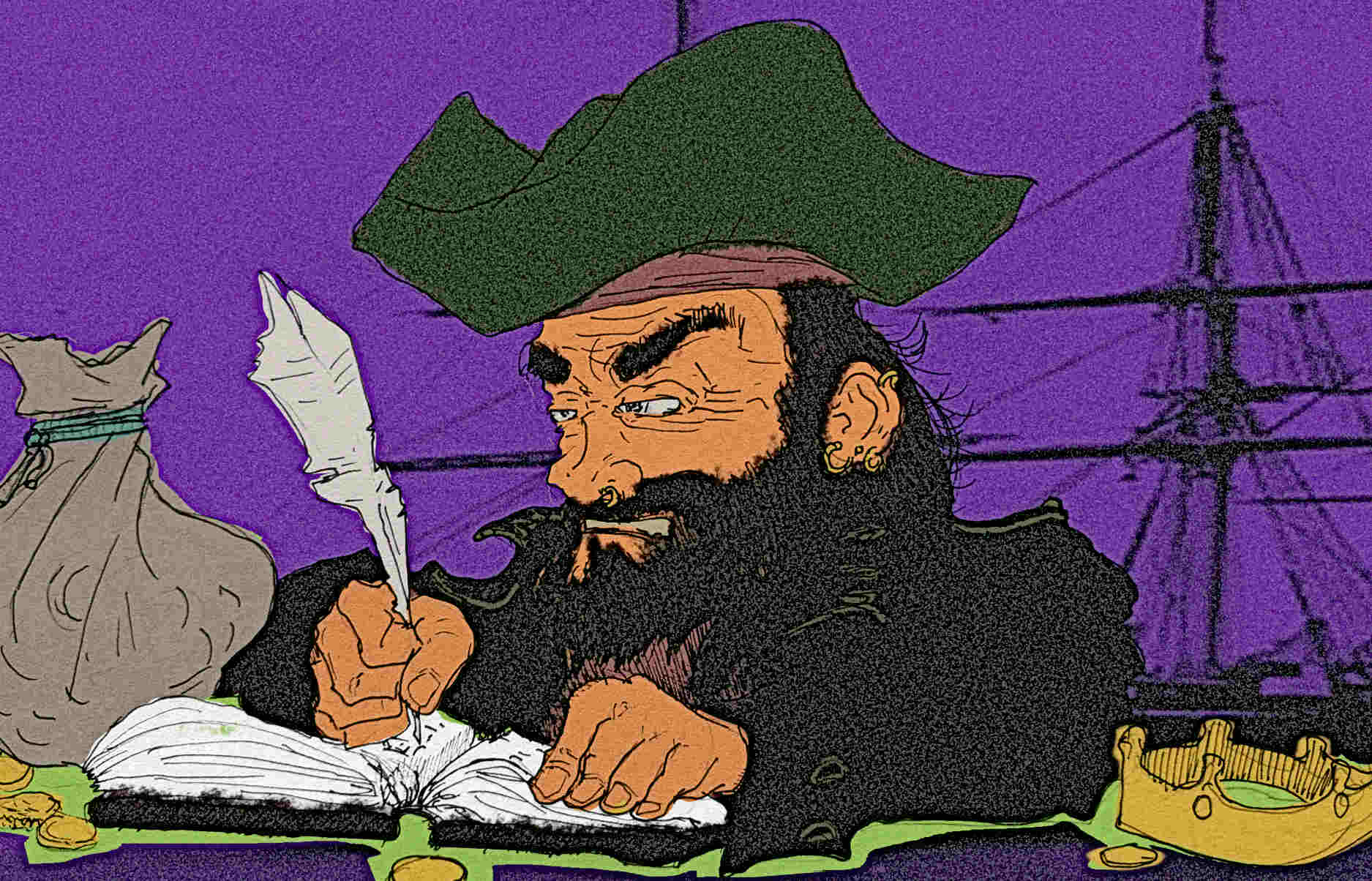
Hooked on The Pirate Life
2025-Oct-07
Another book to be reviewed for the blog? Really, another book? Every time there is a new blog post, it’s about some damn book. Not the hottest new pop song. Not the big blockbuster movie that is bringing people back to the movie theaters. Not the big dramatic series that pulls in the big ratings on the target demo. Not some new indie video game that explores new gameplay mechanics into uncharted territory. Nope. Another book. A physical copy of a non-fiction book I picked up from the library. Published years ago. Not too many. 2007.
Personally, I blame the media for this. For not being good enough! And too darn expensive. It feels less worth the money each time I watch or play something new. Why shell out cash to see predictable trash? The classics are free! Or old stuff that was not profitable when it was new so the IP owners do not guard it well!
When I was younger I had not just a tolerance for new media creations, but a thirst for them. I felt compelled to make sure I was consuming new stuff. To know what was ‘cool’ among the kids at school, I suppose. At this age, it is quite the opposite. I do not see anything exciting from new media providers. When I was an impecunious college student, some digital alarmist would have called me a pirate. Stealing all the media content on the seas of the internet.
It would be even easier now for me to find pirated media, but who cares about the new stuff? I don’t. For the sake of small talk, I can see the reasons for wanting to stay current with pop culture. Unless that starts improving, I guess I will have to resort to the weather more often to make small talk. I do not foresee any change soon. It’s just going to be more superhero movies, online video games as a service, and I suppose a decent television series that pulls me in now and then out of the TV muck.
Although I spent a few paragraphs trashing the modern media landscape, the book I read is ostensibly about a myth that has been profligate among the media, in spurts: pirates. I suppose criminality in general looks more romantic in the media. However pirates get an almost unblemished portrayal. A brush off for their crimes. What is the core reason for just why that is, I do not know too much more why after reading this book. Instead I learned about each item of loot they took.
The book in question is The Republic of Pirates by Colin Woodard. Seaborne piracy is a profession that has existed since the dawn of sailing. What this book is about is the narrow sliver of history that created the bulk of heroic ‘pirate’ figures that filled out the common tropes of ‘pirates’. The ones who get movies made about them, starring Errol Flynn. The ones that had stories printed about them in cheap newspapers or short pamphlets within their lifetime.
The author quickly makes that distinction in the beginning chapters of the book about how the pirates in this book are those ones that Hollywood fell in love with, not just run-of-the-mill waterborne criminals. The introduction promises to speak of how this era of pirates was so different, yet he does not provide anything of substance. At best we get a sentence or two that states the reasons this era was different from any other era of piracy. Not much follow through on why this difference mattered in the lives of these pirates.
He does make some quick answers to nominally explain how the situation these pirates find themselves in was different from those of yore, or after. These pirates exist in a political and geographical climate that gives them a chance for some truly unfettered piracy. Not just gangs hiding from the law, but a chance to almost act as if they were the law. Uniting under their own banner without sponsorship from a crown.
Subsequently, it meant that for a few years, or even decades, pirates could gather in such strength that their gatherings fostered political beliefs. These political ideas get little mention in the book. They never penetrate past the most shallow of references to the actual organization or thought among the ocean-going pirate crews. The deepest we get is the very mention that some famous pirates wanted to make their own ‘republic’.
My own awareness of these brief pirate republics began in my academic political science readings. It was a hot idea. A mildly successful example of anarcho-syndicalism. That particular political label is a little overblown. At the heart of these Caribbean pirate republics in the early 1700s were ideas of equality among hundreds of workers in an employee-owned enterprise.These dudes were a professional group that used their union to make their own economic destiny. Palpable representation of my youthful anarchist ideals in action, and performed by heroes of fantasy!
Heroes that were in popular culture again. During my time in college reading political texts, Disney was selling a lot of tickets with their Pirates of the Caribbean movies. Their success sparked a resurgence of pirates for the whole 2000s. In that time, pirates were the default Halloween costume. Pirate theming was ever present. Remarkably, I do not think any movies were able to replicate the pirate idea reentering the zeitgeist. Just costumes, themed episodes, and online comics where the pirates fought ninjas
That is why I had hoped this book would be a more enriching experience than reading about the mercenary achievements of four or five pirates. I knew a bit about the era, the politics, and was saturated with the stereotypes of golden age pirates. I was hoping to get more purchase into this book explaining just why any of those came to be. Why the pirates were so cool was what I wanted to explore further. Not discover how much gold they took by the pound.
This book does not take as much time as I would like when talking about the ongoings of the European imperial powers duking it out on the Continent. Those costly wars were what let the Caribbean be unguarded long enough for piracy to thrive to mythical proportions. Once again, the author does a nominal job. He does mention this war or this king, or war for king’s successions. They are treated as externalities to the pirates doing their thing: finding a ship and robbing it, and possibly stealing the ship too. We hear that act repeated a lot. Not just the novel acts of piracy. All that the author could find. He delivered a book that reads like the bill the pirates left for their thefts.
The idea of Jacobinism or the installation of the Catholics and/or Stuarts to the British throne is a standout as a political idea that gets some exposure. It gets brought in as a possible raison d’etre for these pirate republics. Especially when the book chronicles Charles Vane, one of the four protagonist pirate captains the author sticks the plot around.
This famed corsair made a longshot deal with European partners to coordinate their efforts to remove the Hanoverian king sitting on the throne of England. It seems Vane was making these efforts on a very self-serving basis without any real follow-through on the idea of governing the Bahamas with the rightful king on the throne. Or for caring about Catholicism or dynasties.
The other political aspirations besides this failed political gambit to take the side of a pretender king are inchoately described at best in this book. There is talk of freedom quoted among the pirate sailors, yet we never really hear just how this ‘freedom’ is expressed. How do these stationary pirate bases exist on a day to day basis? We are told the functioning anarcho-pirate towns ruled on the same principles of an underway pirate crew. It gets left at that.
If there was more explanation on how these towns worked, let alone how pirates inhabited the same island as a British royal governor, it was not explicitly mentioned. There were traders, civilians, and whatnot in this legal gray area in these handful of geographic spots giving safe harbor to pirates for several consecutive years. Offering services, with a section of the population not pirates themselves. Normal tax-paying citizens involved in outfitting crews or fleecing sailors on shore leave. I wanted more about how they lived together in harmony? In disharmony? I do remember a repeat complaint of the colonial governors for the laziness of their denizens. That was something that made me glad to hear. Caribbean laziness sounds like the best a poor person could get in that era.
There was a lot of recounting of the goods, ports, and sailing vessels and any combination of those three things. So, so much of that. This book was how a grocery clerk would want to know how the so-called Golden Age of Piracy transpired. There were 4’ish big pirate names moving the stories forward. Among those pirates, every single item they ever stole was painfully recorded. So much that I am quite impressed with how much information is available for this era. Although there was a scarcity of law enforcement patrolling the coastal seas of the American colonies, there was no shortage of financial ledgers around the Caribbean in the early 1700s. Lucky for pirate historians.
Among the famous pirates mentioned, the author lumps in a ‘pirate hunter’, Woodes Rogers. A straight man to the more colorful cast of pirate captains. He is a splendid example of a 18th century English sea dog that does have some great anecdotes about being a shipowner that personally commands fleets to repel the pirates that steal his goods. He did not seem to have as crucial of an impact on the termination of the pirate republics as the author would have you believe in the introduction. More of a case at being at the right place at the right time.
Pirates themselves are perhaps just too sexy of a topic for academic pursuit. Their tales of adventure and plunder obscure their premise. It makes it hard to see their introduction to history past the flamboyant swashbuckling. What I find most interesting about them is their example of the working class standing up for themselves. Not just in one revolt, but by living well for several years. A rare chance for the common man to exploit the flaws in the system the elites made to profit themselves. What I can applaud this book for mentioning, in its rote style of crime reporting, is that most sailors would just convert to piracy whenever some dude put the money together to hire a ship to pursue pirates.
The very notion of being a sailor and being treated like shit by the ship’s management spread like a virus once sailors got a look at what that is like in the flesh. To see that it was not a pipe dream. These ship owners and navy captains kept suffering defections every time close contact was made with these pirates. Sometimes whole crews would turn over in a mutiny. The ship owners and the naval officers did not think to try anything else except kill the pirates at a distance. They not once thought to improve the lives of the sailors, so that they wouldn’t be so goddamn quick to join a criminal gang.
Add Comment